
The new 1.2L engine (RPO LBP), introduced in the 2025 Envista, Encore GX, Trax and Trailblazer, features E85 compatibility. As part of the updates to the Evaporative Emission (EVAP) system, a new component — the G34 EVAP Leak Detection Pump Assembly (Fig. 10) — replaces the vent solenoid found in traditional EVAP systems.
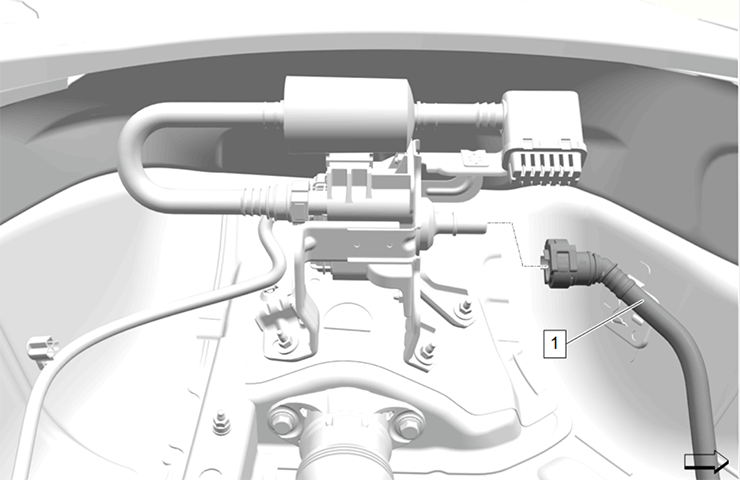
Fig. 10
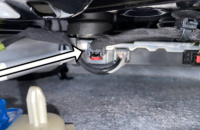
Before performing EVAP system leak diagnostics based on DTC P0442 (Evaporative Emission System Small Leak Detected) or P0455 (Evaporative Emission System Large Leak Detected), the G34 EVAP Leak Detection Pump must be disconnected to prevent damage. Typical EVAP system testing is performed from the front of the vehicle to the back. For the 1.2L engine, the leak check pump is at the end of the line at the rear of the vehicle. (Fig. 11, #7) If not disconnected, smoke oil could collect in the pump, leading to pump failure. Do not allow smoke to enter the pump.
Failure to follow the updated service procedures will require pump replacement since the EVAP leak detection pump is highly susceptible to damage if exposed to smoke or mineral oil used in OEM and aftermarket smoke testers.
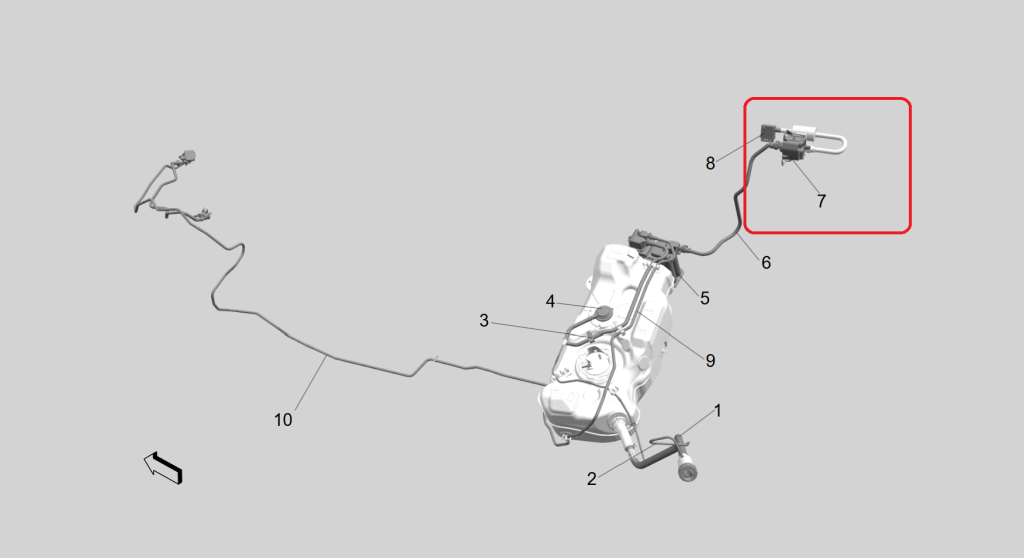
Fig. 11
Using the necessary special tools, including the GE-41413-A/B/C Evaporative Emissions System Tester (EEST), the updated leak diagnostic procedures for DTCs P0442 and P0455 instruct technicians to disconnect the leak detection pump from the EVAP system before testing. Refer to Document ID 6496657 in the appropriate Service Information for complete information.
G34 Leak Detection Pump Operation
The G34 EVAP Leak Detection Pump is used to detect leaks in the EVAP system. Unlike traditional EVAP systems, the system for the 1.2L E85 engine does not use a vent solenoid to seal the system, which significantly changes the procedure for performing leak tests.
The G34 EVAP Leak Detection Pump Assembly consists of four main components. (Fig. 12)
- EVAP vacuum leak pump switching valve (#1)
- Reference orifice (0.020 in.; 0.51mm)
- EVAP vacuum leak pump pressure sensor
- Leak detection pump (driven by a 12V DC motor)
These components are integral parts of the EVAP leak detection pump assembly and are not serviceable.
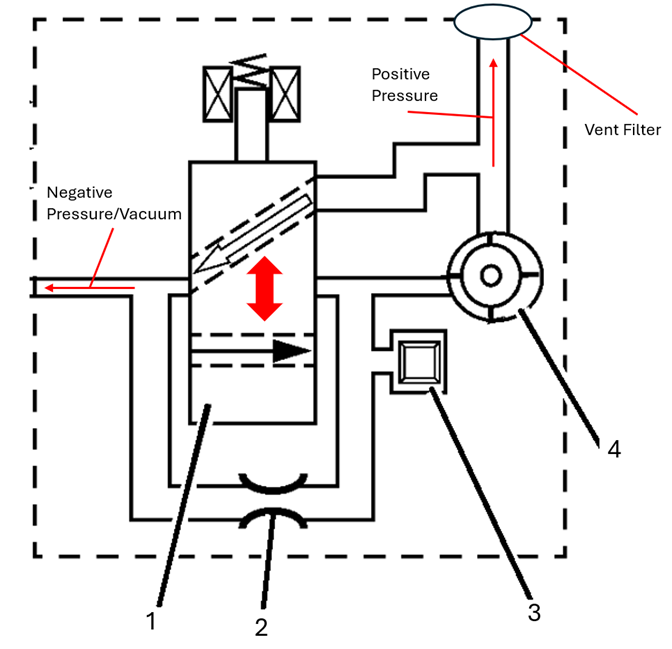
Fig. 12
Leak Detection Process
Here is the updated procedure the ECM will perform to run DTC P0422 and P0455 diagnostics and detect leaks on the new 1.2L engine.
- The vehicle must be driven at least 0.1 miles and then turned off for 5 – 5 hours in ambient temperatures above 40°F (4.5°C).
- The system will begin its automated leak test between 5 – 5 hours when the Engine Coolant Temperature (ECT) stabilizes with ambient temperature.
- The switching valve (#1) actuates, and the pump (#4) pulls a vacuum over the reference orifice (#2) to establish a baseline measurement.
- The valve then switches, allowing the pump to pull a vacuum on the entire EVAP system.
The test runs for up to 800 seconds, comparing pressure values to determine if a leak exists.
Performing a Smoke Test
To perform a smoke test on the new EVAP system:
- Follow SI instructions to access the G34 pump at the right rear wheel well.
- Disconnect the vapor line connecting the EVAP canister to the G34 pump.
- Install the J-41413–303 EVAP tool at the canister hose and then install the GE-41413-A / B / C EVAP tester.
- Introduce smoke at this location – NOT through the G34 pump. (Fig. 13)
- Perform the smoke test following the SI instructions.
- Reconnect the vapor line securely after testing.
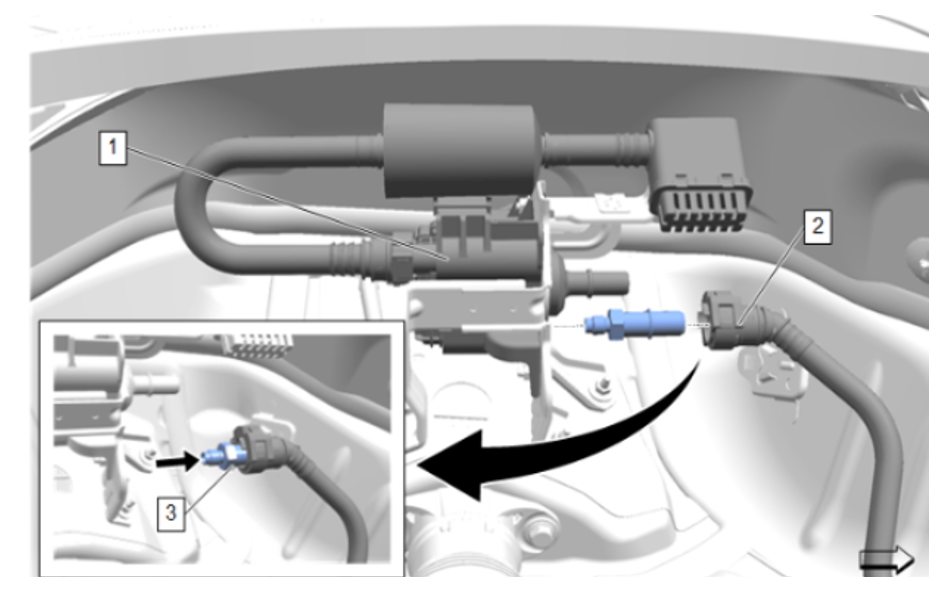
Fig. 13
For more details about testing the new EVAP system, refer to Document ID: 6496657 in the appropriate Service Information and Bulletin #26-NA-094.
– Thanks to Sonny Snyder

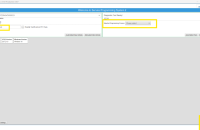









For the LBP engine, the EVAP Service Bay Test can be found in SI doc 6496627.
DOES THESE VEHICLE HAVE EVAP BAY TEST?