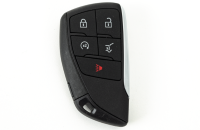
Key cards are wallet-sized cards that can be used to unlock, lock and start a number of GM vehicles when the key fob is not available. Key cards (part of RPO BOY – Vehicle Interface – Smartphone) may be included with 2025-2026 LYRIQ; 2026 Silverado EV, Tahoe, Suburban, Traverse, CELESTIQ, ESCALADE IQ, OPTIQ VISTIQ, Enclave, Acadia, Sierra EV and Yukon models. One key card is shipped with the vehicle from the assembly plant. It should be treated as an additional key fob.
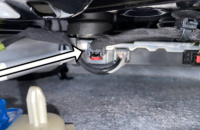
The key card uses Near Field Communication (NFC), which is the same technology used for contactless payment systems, requiring only a tap or brief hold to the card reader — the K300 Near Field Communication Backup Module — on the exterior of the vehicle to verify the correct key is presented to the vehicle. The key card placement location is on the driver’s door handle on Enclave, Silverado EV, Tahoe, Suburban, Traverse, Sierra EV, Acadia and Yukon. It is on the B-pillar applique on CELESTIQ, ESCALADE IQ, LYRIQ, OPTIQ and VISTIQ.
The card should be placed correctly next to the card reader location. The antennas in the door handle and B-pillar are specific to the card placement. Do not place the key card over the door handle’s unlock button. It should be placed in the center of the handle over the opening. (Fig. 7)
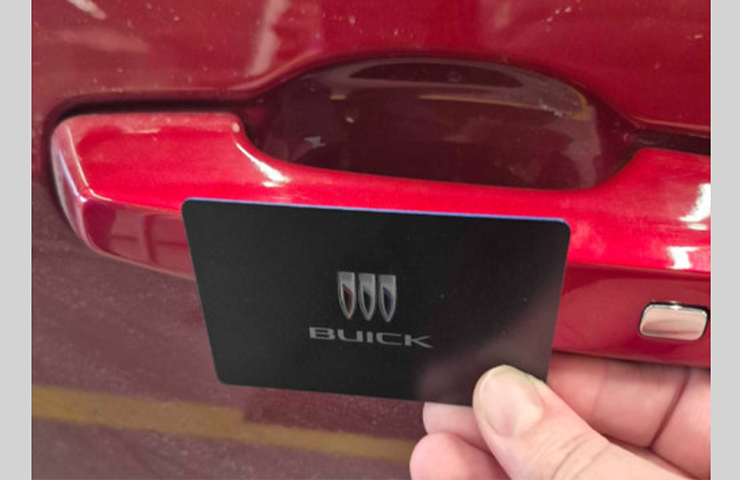
Fig. 7
Refer to the back of the key card for a helpful graphic showing the exact location and card orientation on the vehicle. (Fig. 8)
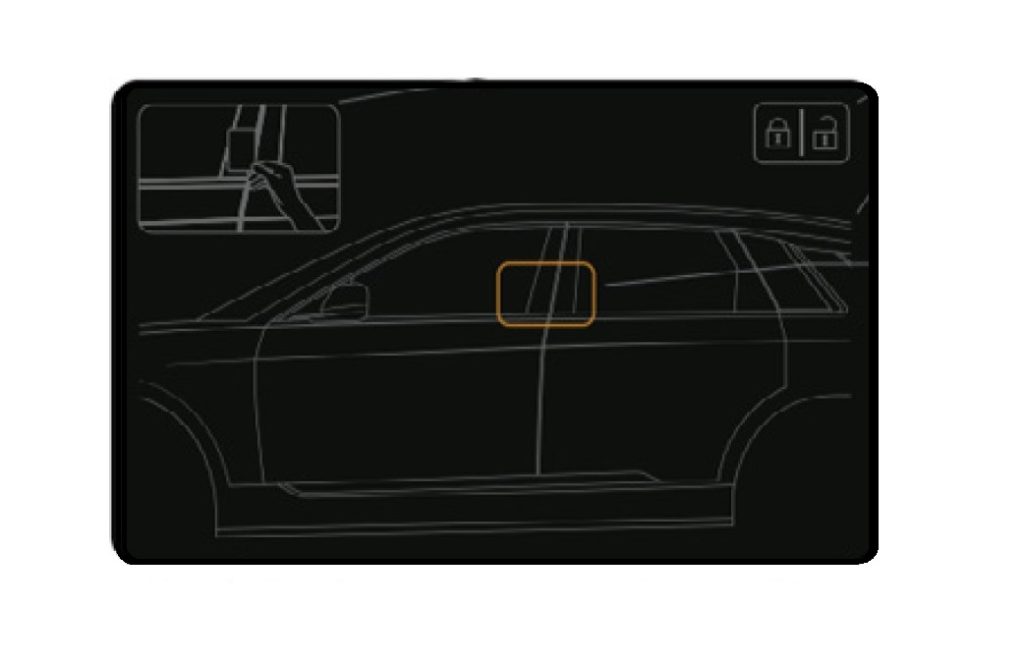
Fig. 8
Using the Card
The key card will work only with the vehicle it has been paired with. When a user presents a key card to the card reader, the K183 UHF Short Range Low Energy Remote Control Access Transceiver will begin authenticating the key card via the NFC Backup Module as a pass-through component. If the information sent to the K183 UHF Short Range Low Energy Remote Control Access Transceiver matches the information stored in the K9 Body Control Module, vehicle access and power moding will be allowed.
To unlock the driver’s door, briefly hold the key card to the card reader on the exterior of the vehicle with all doors locked.
If at least one door is unlocked, holding the key card to the card reader will lock all doors.
TIP: The key card needs to be held in place for a second or two to properly function. (Fig. 9) A quick tap may not unlock/lock the door.
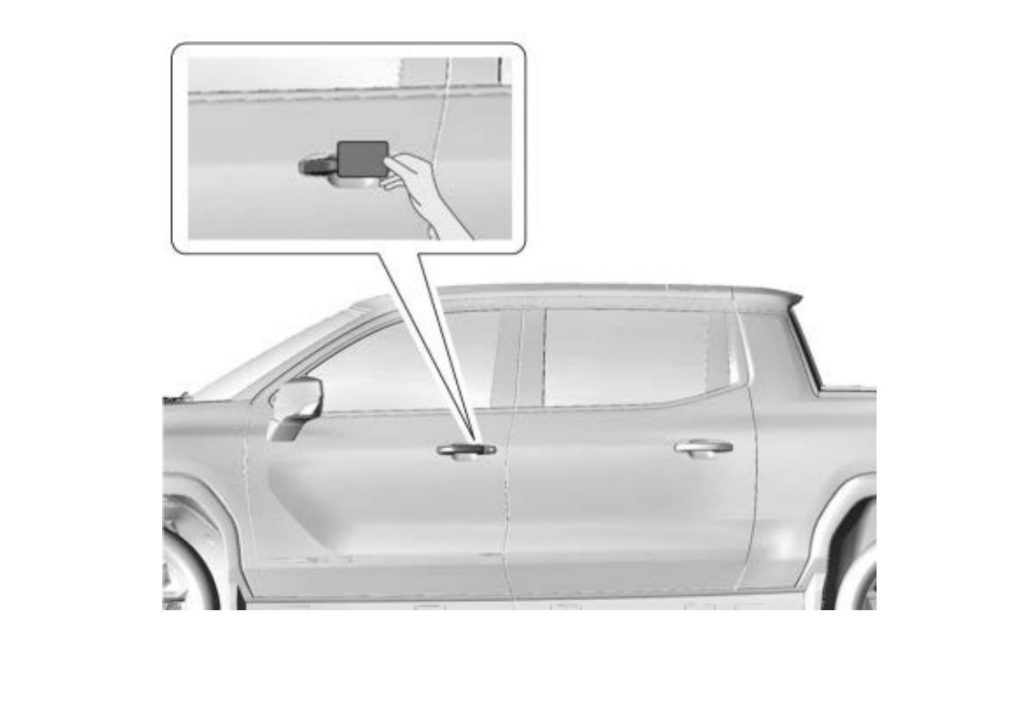
Fig. 9
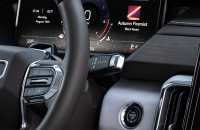
Once the vehicle is unlocked with a key card, the user has 2 minutes to start the vehicle. A timer and prompts to start the vehicle will display on the infotainment screen. If time expires, it will be necessary to hold the key card at the card reader again to restart the timer. If Service Mode is entered during the initial 2 minutes, the vehicle will be ready for Propulsion Mode indefinitely. Pressing the brake pedal will enter Propulsion Mode.
Avoid Key Card Damage
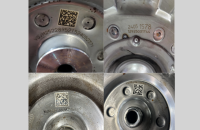
It is important to avoid placing the key card on the wireless charging pad under any circumstance. Customers who keep their key cards in a phone case-style card holder may experience loss of key card function. This is caused by the wireless charger damaging the NFC chip within the key card. If the NFC chip is damaged, there will be a visible blister in the key card. (Fig. 10)
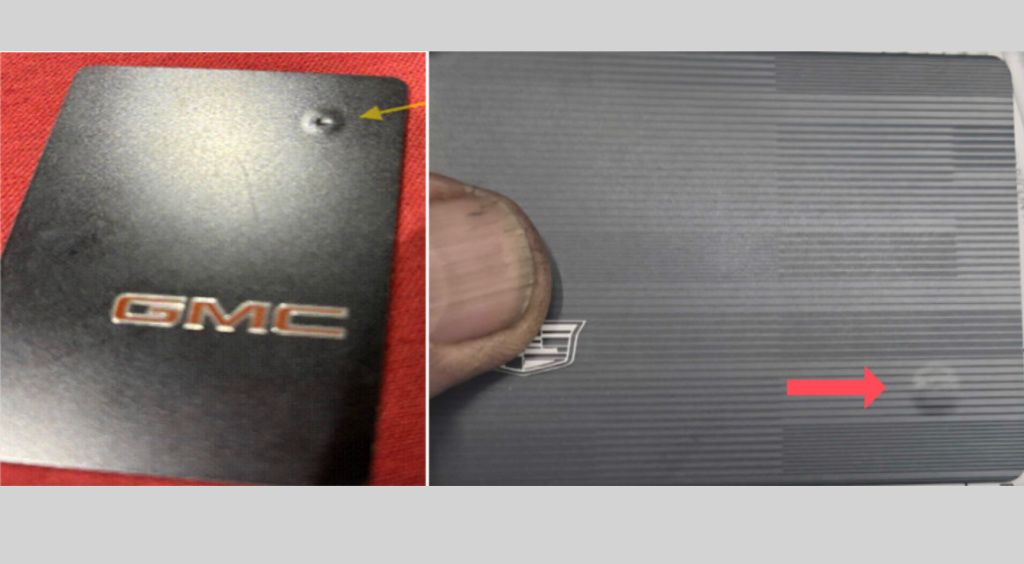
Fig. 10
When diagnosing a key card that is inoperative, check the key card for any signs of bubbling or damage. Once the card is damaged, the card should be terminated, and a new card should be learned in its place.
Programming Additional Cards
Up to 7 cards can be added to the vehicle and can be purchased from the dealership. The Service Programming System (SPS) will show a prompt of how many cards are currently learned prior to learning additional cards.
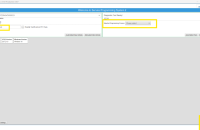
To program additional cards, from the SPS Supported Controllers screen, select K183 UHF Short Range Low Energy Remove Control Access Transceiver and then select NFC Card Learn > Add. Follow the on-screen instructions. Do not hold the key card to the card reader on the vehicle until prompted by the instructions.
A key card also can be unpaired from a vehicle, such as when replacing the K183 module. To unpair a key card, it must be present. An unpaired card can be used again. Be sure to unpair all existing cards before replacing the K183 module because the cards cannot be used after the module is replaced if they were not unpaired.
Key cards can be terminated as well, which deletes the card from the vehicle. Terminate a card when it has been lost or stolen. The card does not need to be present. Terminated cards cannot be used again.
For additional information on NFC key cards, refer to Bulletin #26-NA-099.
– Thanks to Colin Day and Robert Roselle