All engines require oil to lubricate and protect internal moving components from wear. When a piston moves down its cylinder, a thin film of oil is left on the cylinder wall. During the power stroke, part of this oil layer is consumed in the combustion process. As a result, varying rates of oil consumption are accepted as normal in all engines.
GM has provided guidelines for engine oil consumption in 2026 and prior model-year passenger cars, light trucks, and heavy-duty trucks and SUVs at or above 8,600 GVW. The latest versions of Bulletins #01-06-01-011 and #03-06-01-023 highlight the factors that can affect an owner’s concern with oil consumption as well as the driving habits and vehicle maintenance issues that impact oil consumption. Use these guidelines to thoroughly evaluate each case before deciding whether the vehicle in question has abnormal engine oil consumption. (Fig. 3)
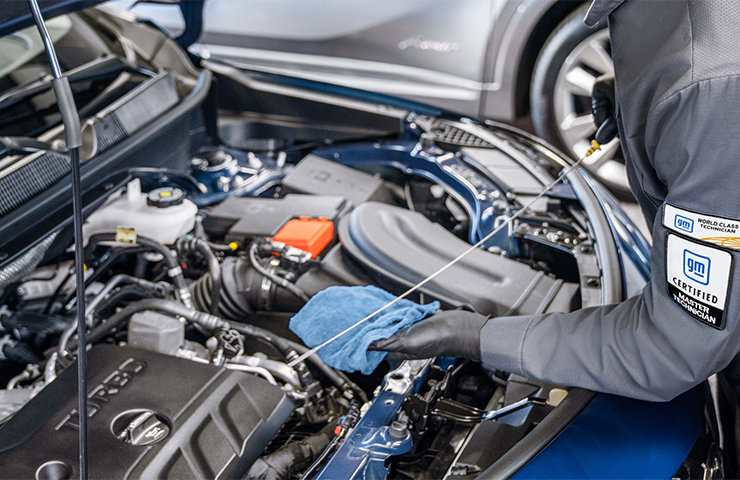
Fig. 3
Passenger Cars and Light-Duty Trucks
The accepted rate of oil consumption for engines used in passenger cars and light-duty trucks is 1 qt. in 2,000 miles (0.946 liters in 3,200 km). This rate only applies to personal-use vehicles, under warranty, that are driven in a non-aggressive manner, maintained in accordance with the appropriate maintenance schedule, and driven at legal speeds in an unloaded (for trucks) condition.
HD Trucks (8,600 GVW and Above)
Oil usage has a direct relationship with the amount of fuel used — the harder an engine works, the more fuel and oil it will use. For heavy-duty trucks and SUVs (at or above 8,600 GVW), oil usage as a factor of fuel usage is a more accurate indicator of acceptable oil consumption levels than vehicle mileage.
The accepted rate of oil consumption for gasoline engines in vehicles at or above 8,600 GVW is 1 qt. within 100 gallons (1 liter within 400 liters) of fuel used. This rate only applies to vehicles under warranty, maintained in accordance with the appropriate maintenance schedule, driven at legal speeds and within the design intent of the vehicle.
Oil Consumption Checklist
Bulletins #01-06-01-011 and #03-06-01-023 review a number of factors to check when determining engine oil consumption, including:
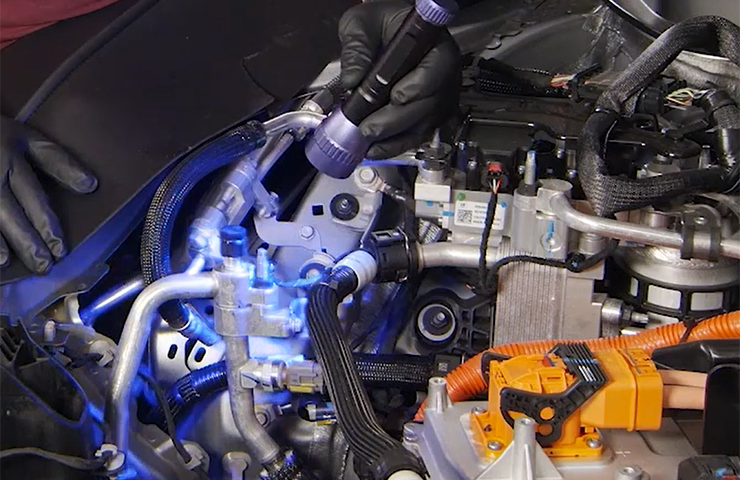
- Gasket and external leaks – Inspect oil pans, engine covers and the engine oil cooler.
- Improper reading of the oil level – Park the vehicle on a level surface, check the oil level reading properly, and ensure the proper dipstick part number for the engine application is being used.
- Waiting to check oil level – Do not take an oil reading for at least 15 minutes after shutting off the engine.
- Improper oil fill – Verify the proper amount and type of oil was added to the engine.
- High speed/RPM driving – Continuous driving at high speeds/RPMs may increase oil consumption.
- Towing or heavy usage – Towing a trailer or hauling additional weight will increase oil consumption.
- PTO operation – Operation of a PTO will increase oil and fuel usage.
- Crankcase ventilation system – Verify the positive crankcase ventilation (PCV) system is operating properly.
- Oil dilution – In colder weather, condensation generated from a cold engine may not evaporate out of the oil when driving short distances. When this occurs, the dipstick may indicate the oil level is over-full. Subsequent longer trips may then give the impression of excessive oil consumption.
- Engine temperature – Verify all cooling system components are working properly so that oil does not oxidize faster than normal.
- Engine wear – Worn components will cause an increase in oil consumption.
Use the Oil Consumption Worksheet in the bulletins to document all testing, including recording the amount of oil and fuel used.
Following the guidelines properly, check and record the vehicle mileage, date and exact oil level. Ensure that the oil level is at, but not above, the full mark on the dipstick (add oil if necessary) and that the proper viscosity and quality oil are being used as recommended in the Owner’s Manual. The customer should return to the dealership for inspection once the vehicle has consumed 100 gallons of fuel.
– Thanks to Bryan Salisbury