
GM has recently established a new air conditioning refrigerant leak diagnostic procedure for GM EVs and PHEVs — including the Silverado EV, Blazer EV, Equinox EV, Bolt EV/EUV, Corvette E-Ray, Volt, Sierra EV, HUMMER pickup and SUV, ESCALADE IQ, VISTIQ, LYRIQ, OPTIQ, ELR, CT6 PHEV, BrightDrop van, and GMT900 HP2 Two-Mode truck and SUV — that requires the use of new materials and methods.
The updated A/C leak diagnosis requires a different fluorescent dye process than used on earlier systems. (Fig. 17) Instead of adding 0.25 oz. of PAG-based dye by free-pour, a sealed injection process is now used with a newly released Polyol ester Oil (POE)-based dye that is designed for these electrified applications.
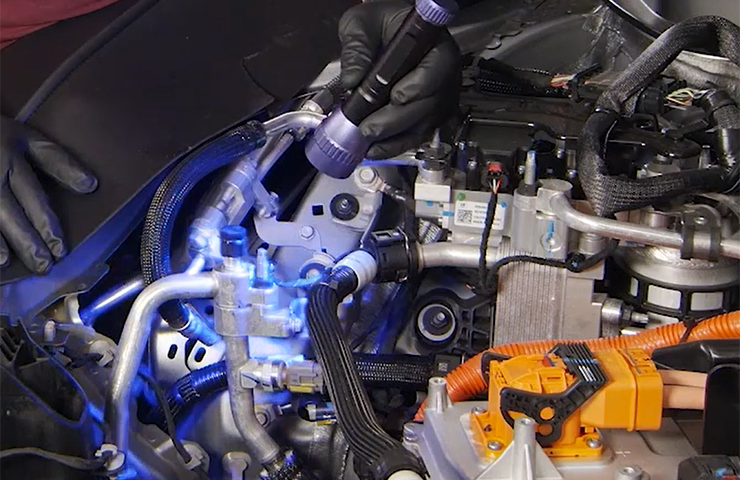
Fig. 17
By using this new dye and injection method, A/C system integrity is protected during leak diagnosis because it does not need to be opened for dye installation, which helps prevent moisture from being introduced into the system. The dye can be injected whether the system is fully charged, partially charged, or empty, and the dye’s base fluid is compatible with the compressor oil already used in these vehicles.
Injection Tool Kit
The EV A/C Dye Injection Kit (TRPTP9814EVHY) enables leak detection dye to be added to the A/C system. It is available through the GM Special Tools and Equipment catalog at gmglobaltools.com.
The kit includes the T-handle injector, brass couplers for R134a and R1234yf systems, two purge adapters, and a starter set of three POE fluorescent dye cartridges. (Fig. 18) Because the kit is not classified as an Essential tool, it will not be shipped to dealerships automatically and must be ordered.
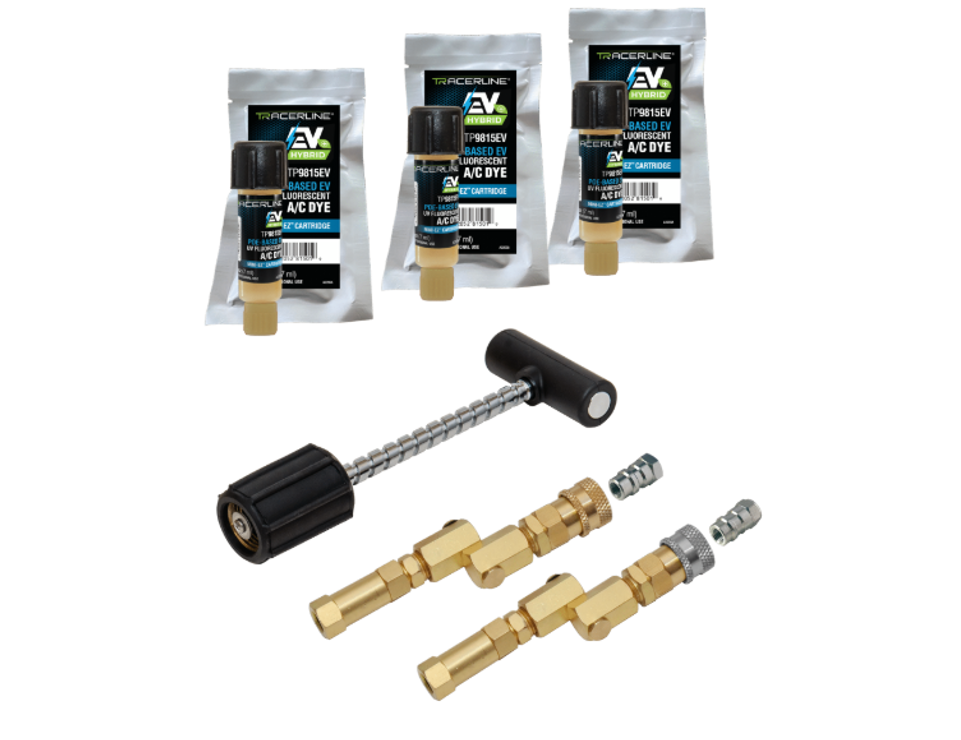
Fig. 18
Additional dye packages can be purchased through GM Parts under PN 19540212, which includes 12 ACDelco-branded POE dye cartridges. (Fig. 19)
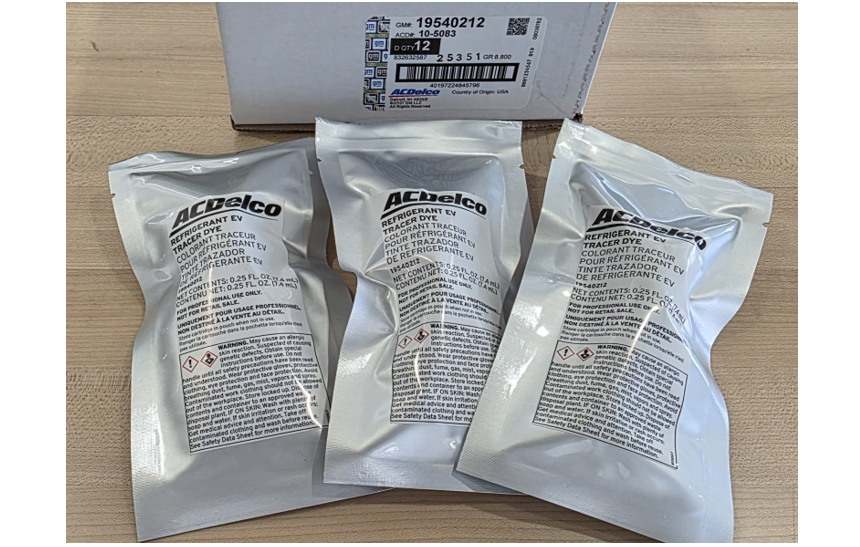
Fig. 19
Using the Injector
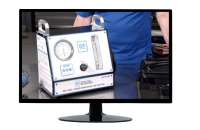
Before using the new injector and dye cartridges for the first time, it is recommended to review the April 2026 Emerging Issues Seminar (10226.04V), available through the Center of Learning link on Global Connect. The video covers the injection procedure, showing how to use the sealed dye cartridge, the priming procedure for the tool (Fig. 20), and how dye is injected into the A/C system with the injection tool. (Fig. 21)
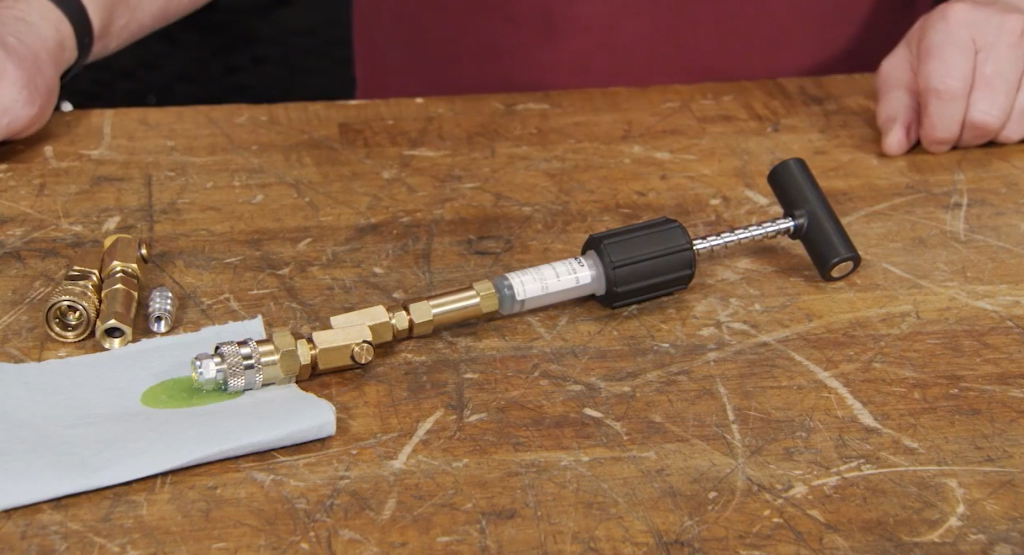
Fig. 20
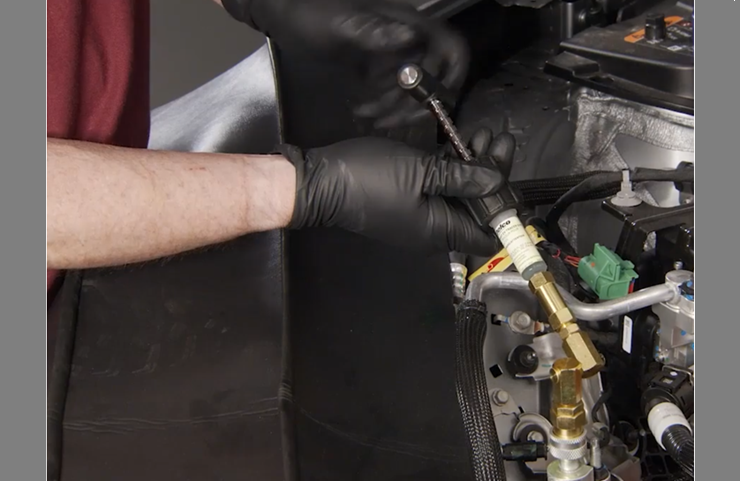
Fig. 21
Leak detection dye requires time to work. Depending upon the leak rate, a leak may not become visible using the leak detection lamp for between 15 minutes and 7 days. To ensure that the dye has been circulated through the entire refrigerant system, run the HVAC system in both the maximum heat and maximum cold temperature settings for at least 5 minutes each.
The vehicle should have at least 15 percent of the specified refrigerant charge in the A/C refrigeration system in order to perform a leak test.
TIP: Vehicles with internal combustion engines and belt-driven A/C compressors continue to require the current PAG-based fluorescent dye (PN 88864127). (Fig. 22)
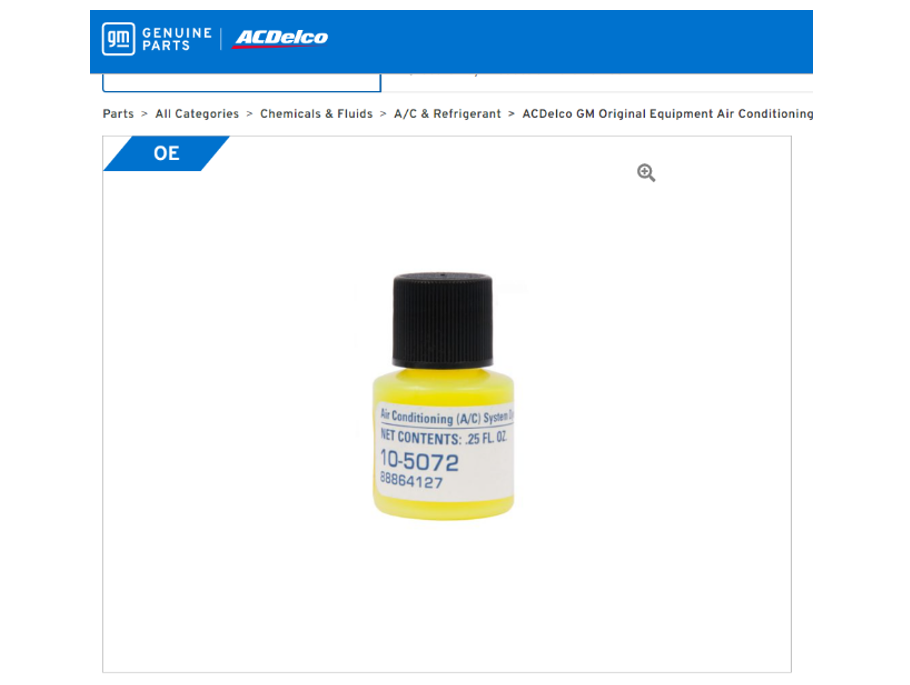
Fig. 22
For more information, refer to Leak Testing under Heating, Ventilation and Air Conditioning in the appropriate Service Information.
– Thanks to Scott Jesnig







GM vehicles are manufactured with fluorescent dye installed in the A/C refrigerant system. The only time adding additional fluorescent dye is required is after flushing the A/C system. When adding dye, be sure to follow the appropriate procedure using the correct tools for the specific system.
Why not just install dye at the factory (Other Manufactures already do this). This way when there is leak it can be repaired on the same visit without having to inconvenience the customer to come back couple weeks later when it starts blowing warm again. Plus it saves time, labor, parts, and special tools in the long run. Just my cents