Open a door without pressing the Unlock button on the Remote Keyless Entry transmitter when the Content Theft Deterrent system is armed and the vehicle alarm will quickly let you know an unauthorized entry has been detected by sounding the horn and flashing the exterior lamps. It’s a sure way to get attention. And it’s one way the Content Theft Deterrent system deters vehicle content theft.
The Content Theft Deterrent system is the second topic in the TechLink series highlighting several of the related systems handled by the Body Control Module (BCM) on GM models built with the Vehicle Intelligence Platform (VIP). The goal of this series is to help improve understanding of the components operated by the BCM and reduce warranty claims and unnecessary component replacement.
The first system in the series is the Keyless Entry System.
COMPONENT BREAKDOWN
- Body Control Module (BCM)
- Remote Control Door Lock Receiver
- Security Indicator (Fig. 7)
- Door Ajar Switches
- Hood Ajar Switch
- Liftgate Ajar Switch (if equipped)
- Intrusion Sensor (if equipped)
- Intrusion Sensor Disable Switch (if equipped)
- Glass Breakage Sensors (if equipped)
- Alarm Siren (if equipped)
- Roof Lift Off Panel Position Switch (if equipped)
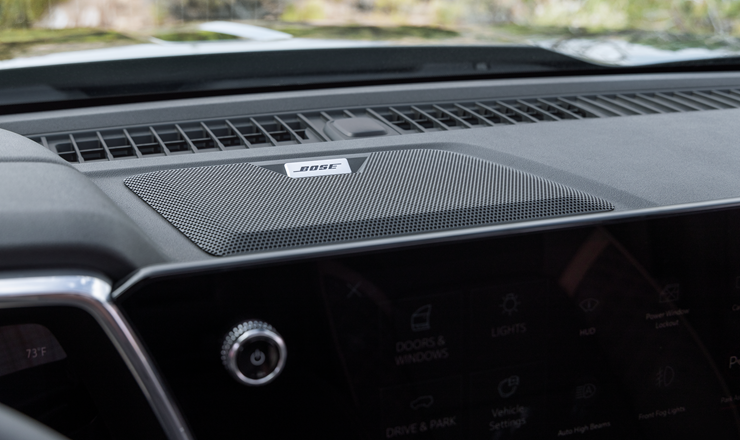
Fig. 7
SYSTEM OVERVIEW
The Content Theft Deterrent system is designed to deter vehicle content theft by utilizing and pulsing the vehicle’s horns (or theft alarm if equipped) and exterior lamps for approximately 30 seconds when an unauthorized vehicle entry has been detected. The theft deterrent system does not affect vehicle engine starting or power mode.
TIP: The system is not armed if the doors are locked manually; the power door lock switch or remote keyless entry transmitter must be used to arm the Content Theft Deterrent system.
When the Content Theft Deterrent system is armed, the BCM monitors inputs such as the door ajar switches, keyless entry transmitter lock/unlock buttons (looks for the message from the remote control door lock receiver), immobilizer status (uses the status to arm or disarm the theft deterrent system), hood ajar switch and, on some vehicles, the liftgate ajar switch, intrusion sensor, glass breakage sensors and the rear window defogger grid, if equipped. Utilizing inputs and signals from these vehicle sensors, the BCM determines if a sensor parameter is a result of unauthorized vehicle entry, resulting in the enablement of the horn and flashing of the exterior lamps.
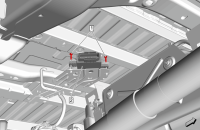
On vehicles equipped with an intrusion sensor and intrusion sensor disable switch (Fig. 8), the intrusion sensor serves as an input to the BCM to detect movement from within the vehicle if the alarm system is armed. If movement is detected, the intrusion sensor will send a message via serial data to the BCM, resulting in a horn or theft alarm trigger event.
TIP: The intrusion sensor should be turned off if pets or personnel are left in the vehicle or if the vehicle is being transported, as these events may trigger a theft system enablement event. Note that not every vehicle equipped with an intrusion sensor will be equipped with an intrusion sensor disable switch.
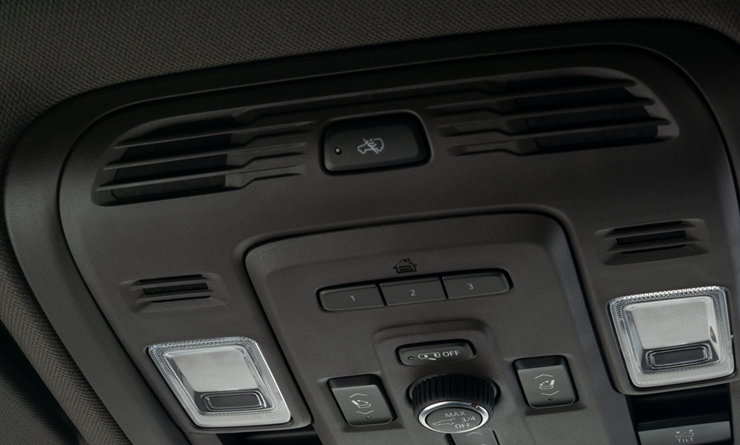
Fig. 8
THEFT DETERRENT SYSTEM TOPOGRAPHY
The Content Theft Deterrent system components include: (Fig. 9)
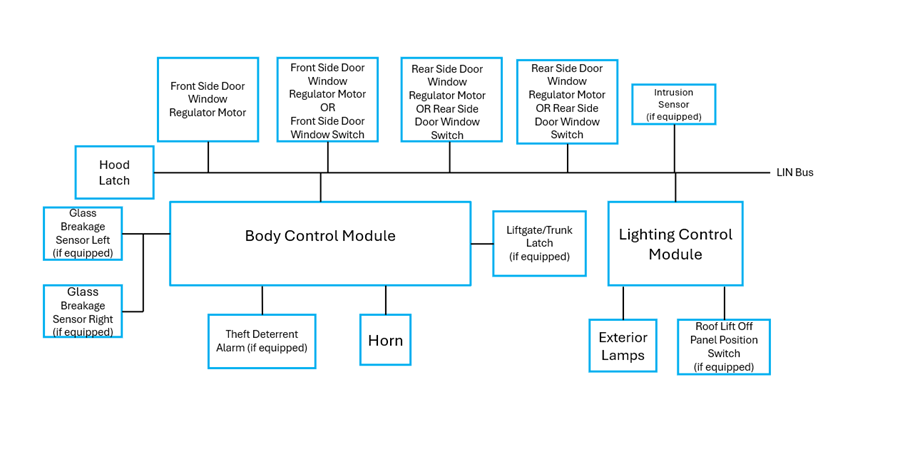
Fig. 9
SYSTEM DIAGNOSTIC STRATEGY
Before starting any diagnostic path, first verify the customer concern by duplicating it on the vehicle. Review the Strategy Based Diagnosis document in the appropriate Service Information before diagnosing any vehicle-related concern. For concerns involving programmable control modules, verify all Content Theft Deterrent-related modules have the latest available software before proceeding with module replacement.
Once a concern is verified, to help pinpoint and correct the concern — and avoid unnecessary component replacement and warranty costs — be sure to use the proper GM-authorized tools before beginning Theft Deterrent diagnostics. A digital multimeter, such as the Fluke 87, is recommended for vehicle electrical circuit and system testing because it provides true RMS measurements and can capture peak MIN/MAX values. An authorized scan tool such as the EL-52100 Multiple Diagnostic Interface 2 (MDI 2) also is required.
Check for Communication and DTCs
When diagnosing a vehicle with a theft deterrent system fault, verify all associated theft deterrent modules are communicating and review the theft deterrent alarm system trigger data. Scan the vehicle for any communication Diagnostic Trouble Codes (DTCs). Investigate any set codes before proceeding. If the concern is not accompanied by a DTC, removing and reinstalling the BCM fuse(s) may correct the issue.
The scan tool Content Theft Deterrent Trigger History 1, 2, and 3 parameters can be used to help isolate an intermittent unwanted content theft deterrent alarm. These parameters are a rolling history of the previous three causes of a theft deterrent alarm. If all three parameters are indicating the same alarm trigger, the indicated input should be the starting point when diagnosing an intermittent concern.
In addition, always check for any applicable Preliminary Information documents or Technical Service Bulletins related to the Content Theft Deterrent system.
For more information, refer to Safety and Security > Theft Deterrent in the appropriate Service Information.
– Thanks to Dylan Fantin