There is more to the Mirrors system than meets the eye on many GM models. From power controls for driver and passenger outside rearview mirrors to folding, heated and memory controls, the adjustments possible on the power mirrors make for a complex system with a number of inputs and programmable features. (Fig. 1) The technology available on interior mirrors also continues to grow with electrochromic sensors and camera displays.
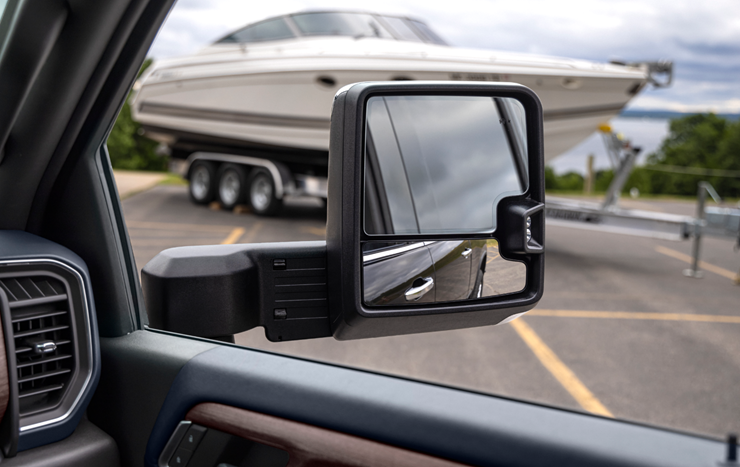
Fig. 1
Mirrors is the seventh topic in the TechLink series highlighting several of the related systems handled by the Body Control Module (BCM) on GM models built with the Vehicle Intelligence Platform (VIP). The goal of this series is to help improve understanding of the components operated by the BCM and reduce warranty claims and unnecessary component replacement.
The earlier systems in the series are the Keyless Entry System, Content Theft Deterrent, Door Latch Actuators, Tire Pressure Monitoring Systems, Exterior and Interior Lighting, and Fixed and Moveable Windows.
COMPONENT BREAKDOWN
- Body Control Module
- Seat Adjuster Memory Module
- Front Side-Door Window Control Switch – Driver and Passenger
- Outside Rearview Mirror Actuator – Driver and Passenger
- Outside Rearview Mirror Folding Actuator – Driver and Passenger
- Video Display Inside Rearview Mirror Camera
- Inside Rearview Mirror
MIRRORS SYSTEM OVERVIEW
A vehicle’s mirror system can be viewed as two separate areas: the inside rearview mirror and the outside rearview mirrors. The exact equipment depends on the vehicle’s RPO content, software and calibration.
Inside Rearview Mirror
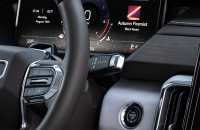
Depending on the vehicle, the inside mirror may be a conventional reflective mirror or a dual-function mirror with a Rear Camera Mirror display. (Fig. 2)
The Rear Camera Mirror receives video from the rear camera through a shielded coaxial cable. Pulling the tab below the mirror switches the display from the normal reflective view to the camera image. A separate control enables adjustments to the display, including brightness and position. Pushing the tab switches the display back to the conventional view.
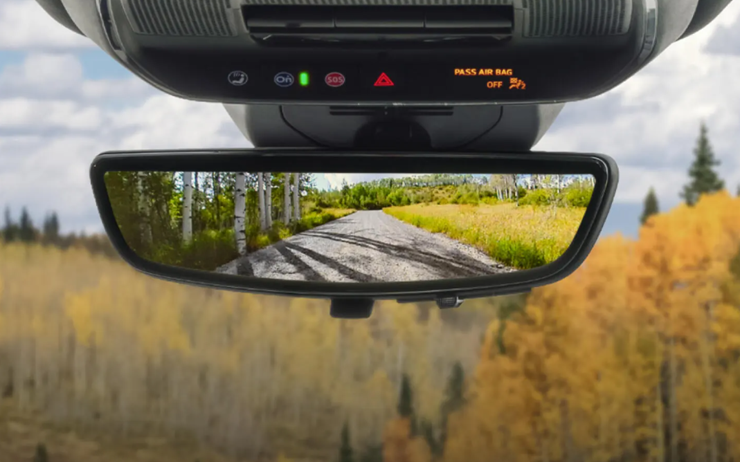
Fig. 2
Some vehicles also use an automatic day/night, or electrochromic, mirror. Two photocell sensors compare the light at the front of the mirror with the ambient light behind it. The mirror then darkens automatically to reduce glare from following vehicles. Depending on the configuration, it also may control automatic dimming of the driver-side outside mirror.
Outside Rearview Mirrors
Outside mirrors may be manually positioned or electrically powered. On vehicles with power mirrors, the control switch is located on the driver-side door. (Fig. 3) Some vehicles integrate it into the Driver Front Side Door Window Control Switch, commonly called S79D, while others use a separate switch assembly.
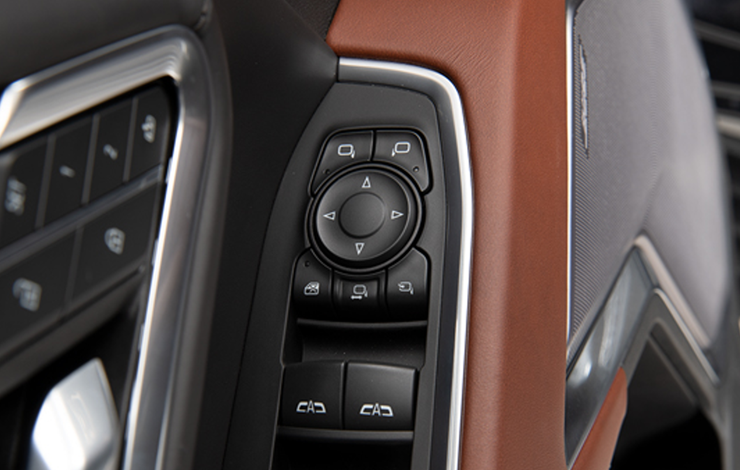
Fig. 3
The switch includes controls to select the driver or passenger mirror and command horizontal or vertical glass movement. In a common VIP arrangement, the driver-door switch controls the driver-side mirror and sends passenger-side mirror commands to the passenger-door switch. The exact switch and module arrangement can vary, so the vehicle-specific Service Information and Owner’s Manual should be used for confirmation.
Memory Mirrors
When equipped, memory mirrors allow drivers to save and recall preferred outside-mirror positions, usually along with a driver’s seat memory position. A typical system includes:
- Driver Seat Adjuster Memory Module — Manages the memory request
- Driver and Passenger Door Switches – Control the appropriate mirror
- Mirror Actuators – Move the glass horizontally and vertically
- Position Sensors – Report the actual mirror position
The process is basically a closed-loop control. The driver adjusts the mirrors and saves a memory position. The sensors provide position feedback, and the door switches retain the applicable mirror information. When a memory button is selected, the memory module requests the stored positions. The door switches move the mirror motors until the sensor feedback matches the requested positions.
In simple terms, the memory module requests the position, the door switches move the mirrors, and the position sensors confirm that they arrived at the right location.
Reverse-Tilt Mirrors
Reverse-tilt is a separate feature that is not included on every vehicle that has memory mirrors.
When the vehicle is shifted into Reverse, the enabled mirror(s) moves to a calibrated curb-view position to help with parking and backing. The vehicle settings allow the driver to select the driver-side mirror, passenger-side mirror, both mirrors, or no mirror.
The system normally remembers the mirror’s driving position and returns the mirror when the reverse-tilt conditions end. Exact behavior—including the selected mirror, tilt position, speed or time limits, and return strategy—depends on the vehicle’s RPO content, software and calibration. On some vehicles, manually adjusting the mirror or requesting a memory recall may cancel the reverse-tilt operation.
MOVEABLE WINDOW SYSTEM TOPOGRAPHY
The following graphics illustrate a representative communication structure for the mirror systems.
Automatic Day-Night Mirror (Fig. 4)
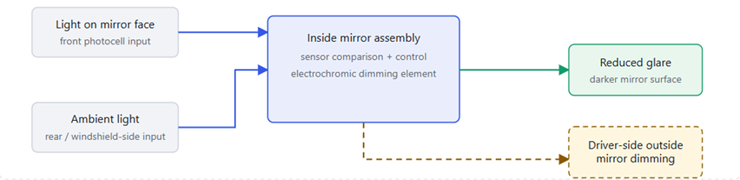
Fig. 4
Rear Camera Mirror (Fig. 5)
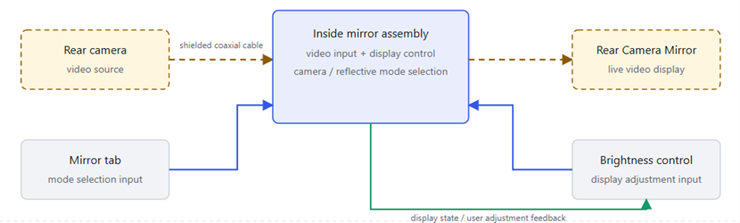
Fig. 5
Exterior Mirrors (Fig. 6)
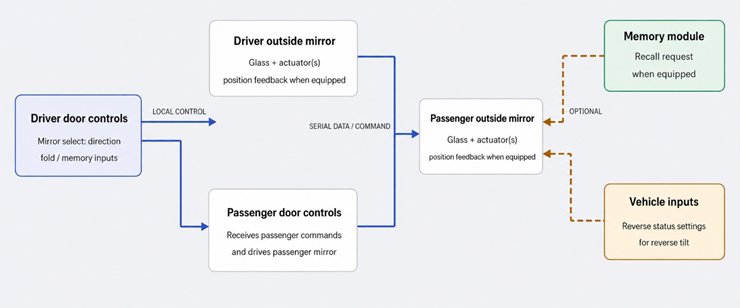
Fig. 6
SYSTEM DIAGNOSTIC STRATEGY
Before starting down any diagnostic path, first verify the customer concern by duplicating it on the vehicle. Review the Strategy Based Diagnosis document in SI before diagnosing any vehicle-related concern. In addition, check for any applicable Preliminary Information documents or Technical Service Bulletins related to the vehicle’s rearview mirror system.
Prior to replacing a suspected faulty control module, verify that the control module is programmable and is updated with the latest available software. Clear all DTCs, and perform any necessary component learn or reset procedures as per the appropriate Service Information diagnostic documents.
To help pinpoint and correct the concern—and avoid unnecessary component replacement and warranty costs, make sure you have the proper GM-authorized tools before beginning any electrical-related diagnostics. This includes a digital multimeter such as the Fluke 87, which is recommended for vehicle electrical circuit and system testing because it provides true RMS measurements and can capture peak MIN/MAX values, and an authorized scan tool device such as the EL-52100 Multiple Diagnostic Interface 2 (MDI 2).
When diagnosing a vehicle with an interior or exterior mirror system fault, verify all associated mirror devices are communicating. For concerns regarding memory mirrors, it is important to scan the vehicle for any communication DTCs set on behalf of the associated control modules. Be sure to investigate those DTCS before proceeding. Since mirror systems can differ in operation based on vehicle configuration, it is always important to refer to the vehicle’s owner’s manual and the mirrors system description and operation documents in SI prior to intrusive diagnosis.
For additional details, refer to Body Systems > Mirrors in the appropriate Service Information.
– Thanks to Dylan Fantin