
The numbers are staggering. The new 2026 Corvette ZR1X produces a combined 1,250 horsepower from its 5.5L twin-turbocharged V8 engine (RPO LT7) and front electric drive unit. The result is a 0-60 mph time of 1.68 seconds, making it the quickest American production car available. And the ZR1X runs the quarter mile in less than half the time it took to read this paragraph — hitting 8.675 seconds at 159 mph.
The 2026 Corvette ZR1X — available as a coupe or convertible — is the ultimate expression of the C8 platform. (Fig. 7)
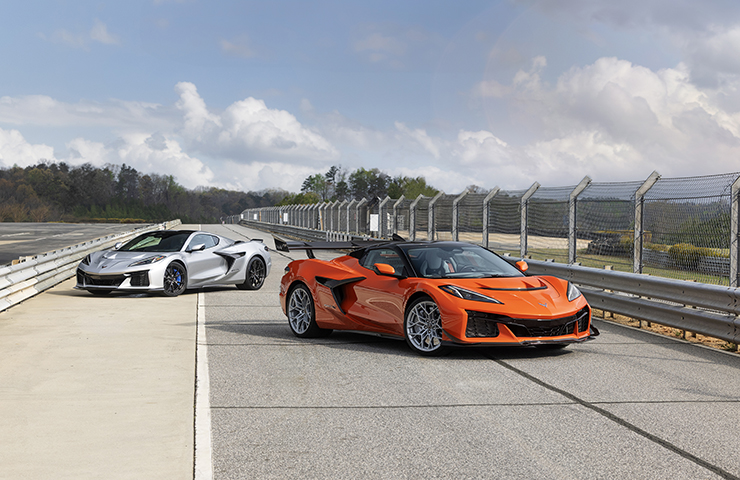
Fig. 7
Its performance on the track or as an everyday driver is complimented by the new three-screen interior layout and redesigned console that also can be found in all 2026 Corvette models. (Fig. 8)
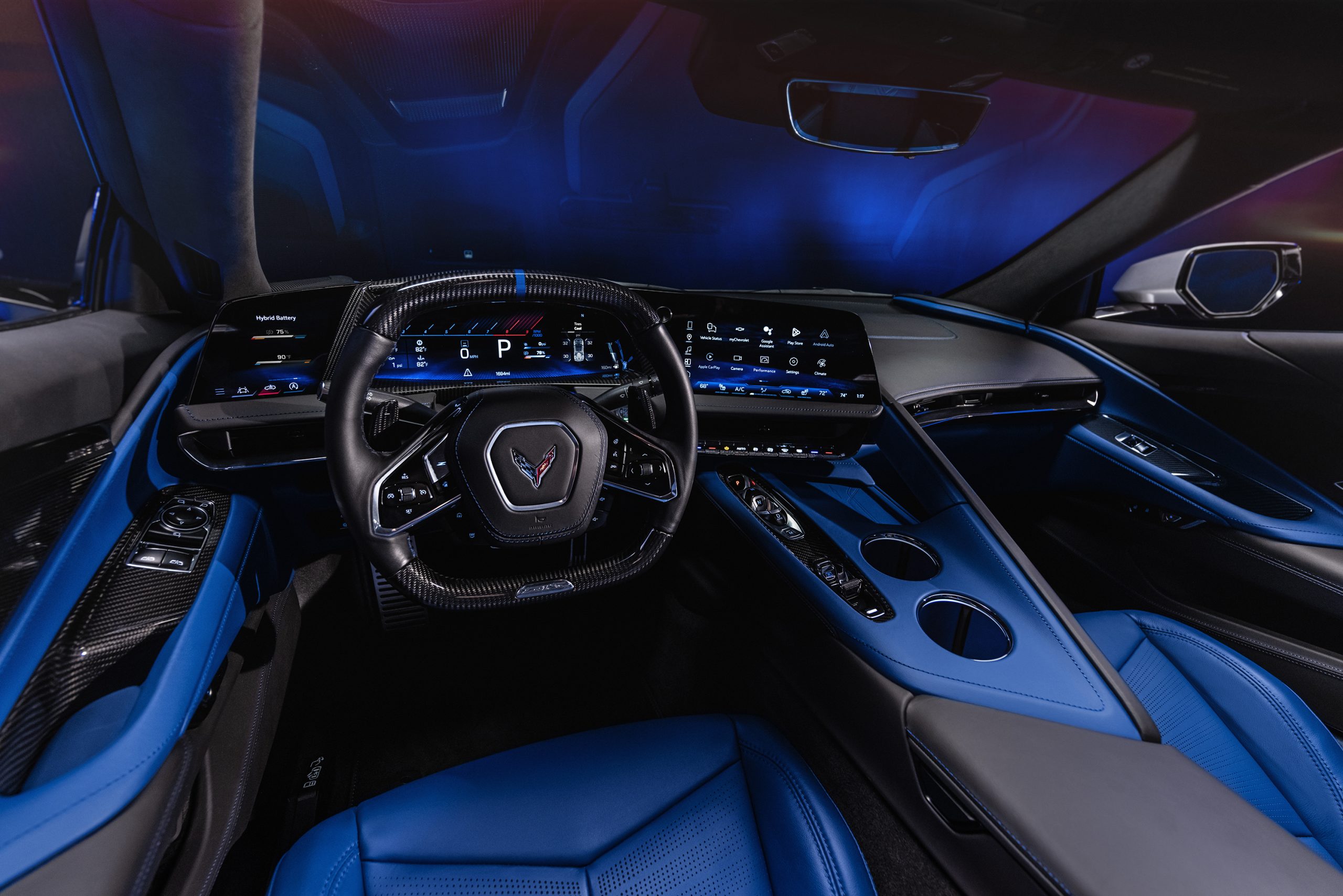
Fig. 8
V8 Power with All-Wheel Drive
The Corvette ZR1X is powered by the LT7 twin-turbo V8, which generates 1,064 horsepower at 7,000 rpm and 828 lb.-ft. of torque at 6,000 rpm, and paired with a front-axle motor that produces an additional 186 horsepower and 145 lb.-ft. of torque.
The hand-built engine (Fig. 9) features a forged flat-plane crankshaft, finger-follower valvetrain, and dry-sump lubrication along with dual 76-mm turbochargers with a “maniturbo” exhaust design that combines the manifold and turbocharger housing, which gets the turbos as close to the exhaust valves as possible to improve throttle response by decreasing the time needed to build boost. Dynamic anti-lag controls that maintain turbo speed when off throttle in certain situations ensure boost is available rapidly when throttle is reapplied.
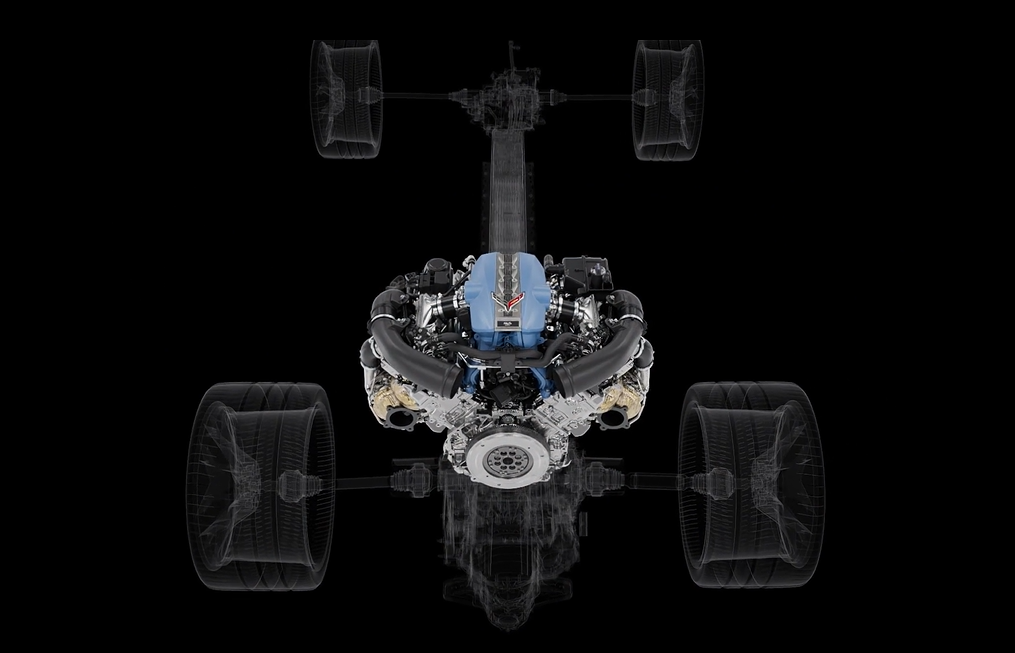
Fig. 9
The all-wheel drive capability adds to the performance of the ZR1X. Based on the foundation set by the Corvette E-Ray, it combines a high-voltage battery pack and electric motor driving the front axle with the V8 propulsion turning the rear axle. (Fig. 10) There is no physical connection between the two power sources on ZR1X, and the electrified propulsion system does not require a plug-in — charging takes place through regenerative efforts from the front drive unit.
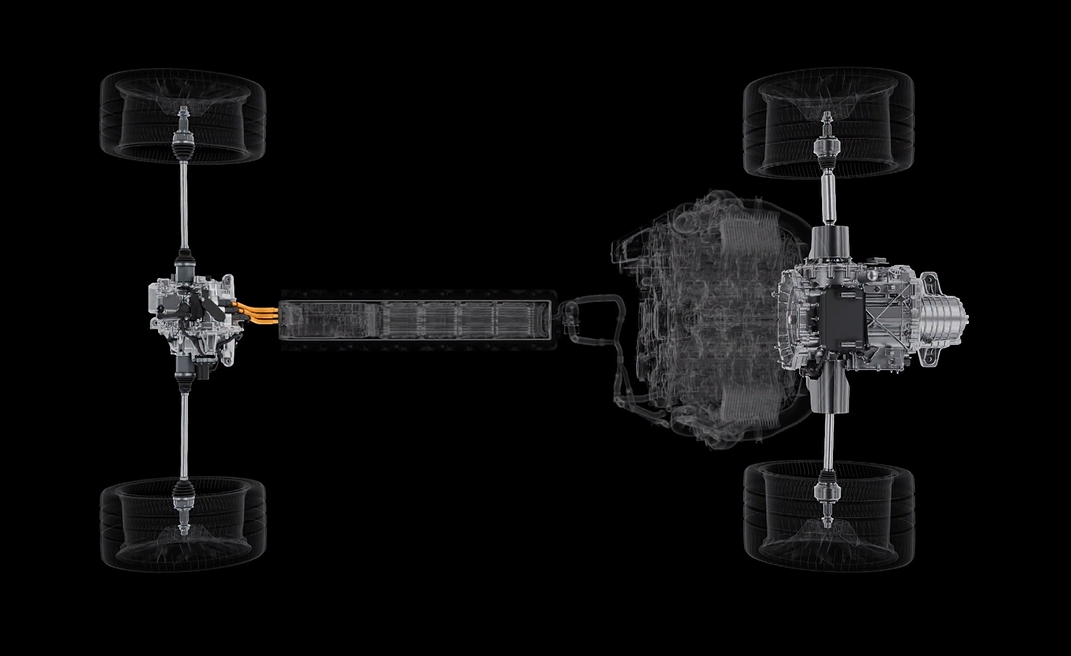
Fig. 10
ZR1X’s lithium-ion battery pack, located low and centralized within the rigid spine of the chassis (Fig. 11), was designed specifically to rapidly cycle between applying bursts of power and charging. While the battery capacity is 1.9 kWh like the E-Ray, the usable energy provides greater lapping capability. The front axle is engaged and can apply power through 160 mph before disconnecting.
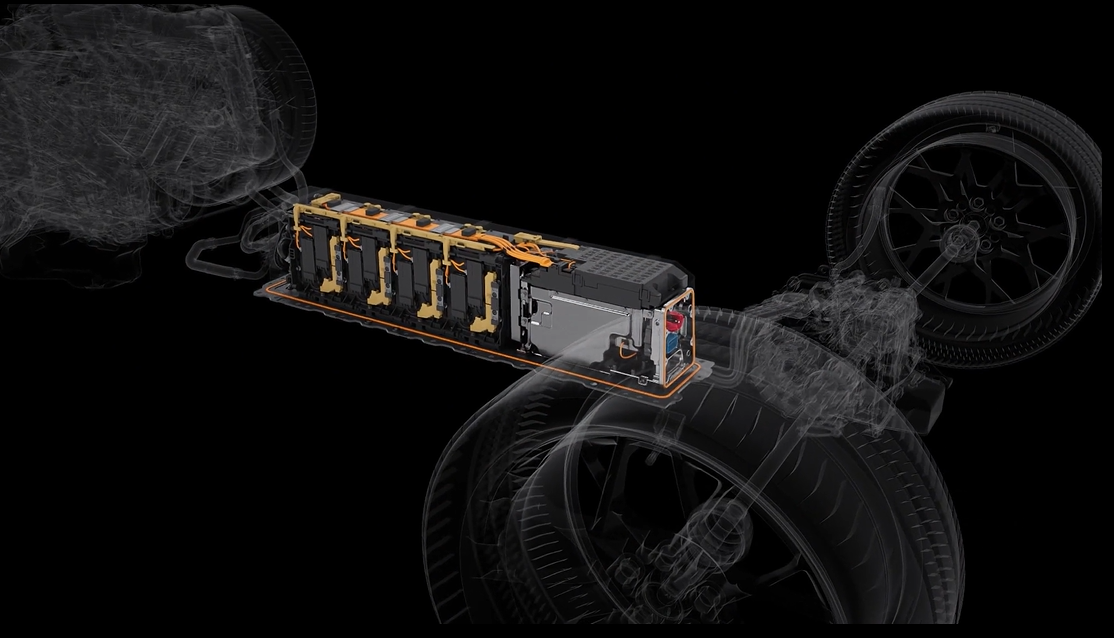
Fig. 11
The system also offers limited EV-only drive modes at speeds up to 45 mph for a short distance, allowing for quiet operation to move the vehicle or exit your neighborhood.
The ZR1X does not use a traditional 12-volt lead acid battery. Instead, it comes standard with a 12-volt lithium-ion battery (LiB), which is the same part as found in the E-Ray. Refer to the appropriate Service Information for the unique instructions for charging and recovering this battery.
TIP: The GM Technicial Assistance Center is ready and available to answer any questions related to the 12-volt lithium-ion battery. Do not make assumptions about how to charge this unique battery.
Since the ZR1 and ZR1X do not have a front trunk, there are a few changes at the front end related to the new air diffuser.
- There is not a button pad under the driver-side headlamp to release the hood. Use the key fob or the button on the driver’s door panel to release the hood.
- The 12-volt power outlet also is no longer present, so trickle charging for vehicle storage is accomplished by connecting clamps directly to the 12-volt battery up front.
- Closing the hood is done similarly to 2020-2023 Corvettes where it must be pushed to close the latch. The hood does not have an auto-cinch feature.
The standard J59 braking package provides impressive stopping power with carbon ceramic brakes that are engineered for ultimate performance and heat resistance. The 16.5-inch front (Fig. 12) and rear rotors are paired with Alcon 10-piston front and 6-piston rear calipers. During development testing, J59-equipped Corvettes achieved 1.9G of deceleration from 180 to 120 mph.
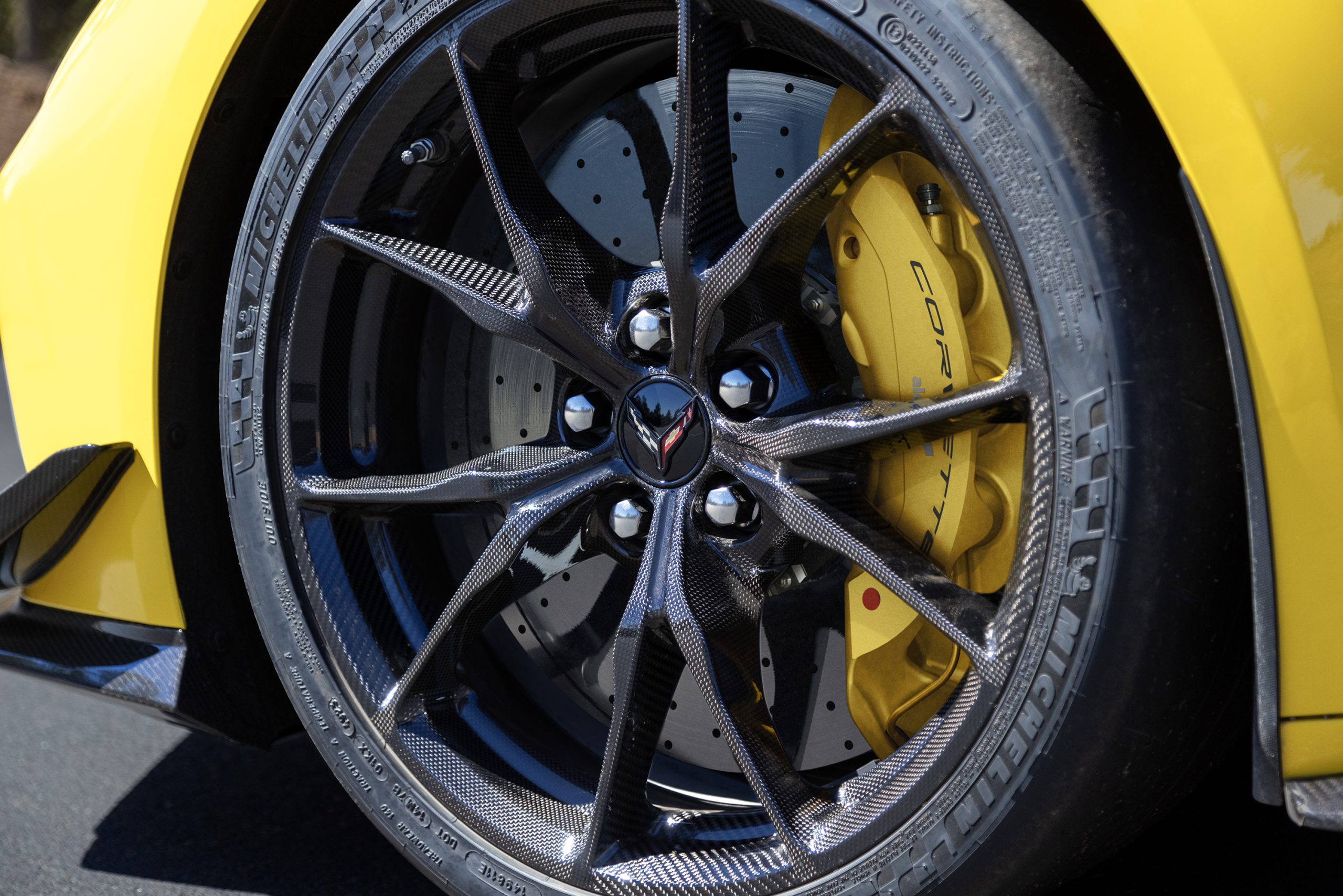
Fig. 12
New Performance Traction Management (PTM) Mode
PTM Pro is new for 2026 on all track-capable Corvette models but was designed with ZR1X in mind. In PTM Pro, the traction control and electronic stability control are turned off while the following features remain active:
- Regen Brake Torque Vectoring – engineered to recover peak energy without sacrificing agility
- Front Axle Pre-Control – actively manages inside front brake pressure to enable maximum corner-exit traction
- Launch Control – customizable settings enable rapid acceleration from a rest
All PTM Modes can be selected using the auxiliary display touchscreen.
In addition, the Performance App, which debuted on the 2024 E-Ray, is now standard on the entire Corvette lineup. Live horsepower and torque gauges show current operation, along with data plots of power produced over time. (Fig. 13) Additional app features include acceleration timers; G-force and propulsion system gauges; and a front motor power gauge. All gauges are available in the auxiliary display as well as the Performance App in the center touchscreen display.
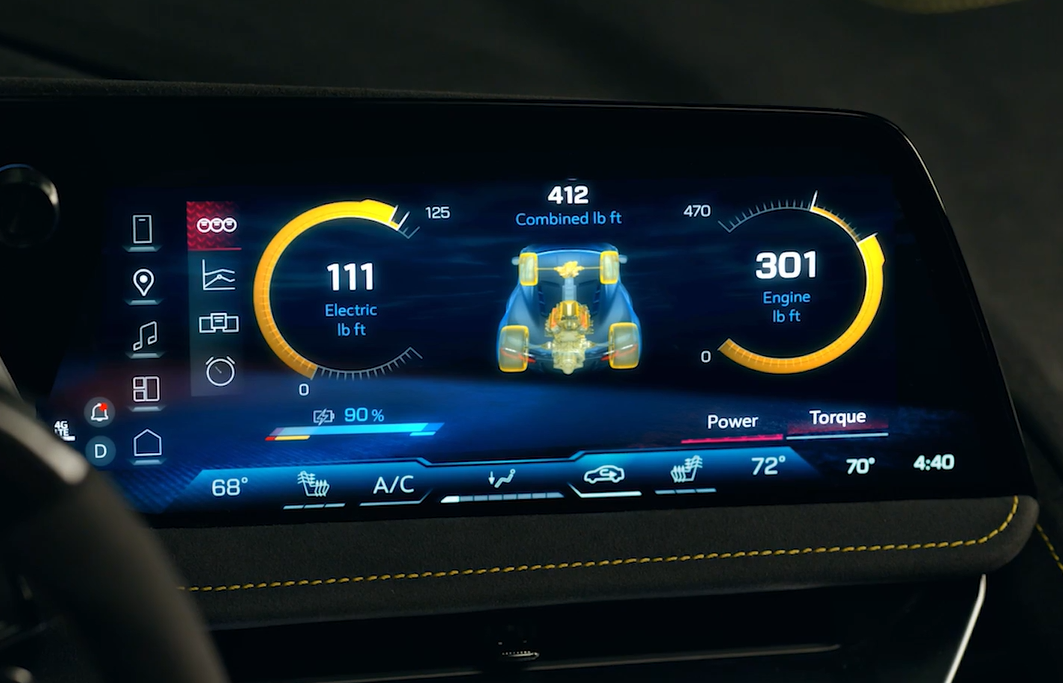
Fig.13
TIP: During Pre-Delivery Inspection (PDI), the lifetime peak values of the G-force gauge in the Performance App should be reset on the center display. To reset the values, select the Performance App icon from the home screen, and then touch and hold the G-force gauge tile. Refer to Bulletin #25-NA-190 for more information, including a video of the reset procedure.
Redesigned Interior Layout, More Screens
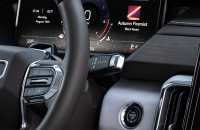
The cabin of all Corvette models has been redesigned for 2026. It features a new three-screen layout and reconfigured center console design. (Fig. 14) The updated driver-centric cockpit includes a larger 12.7-inch diagonal center console display (Vehicle Center Display, or VCD), an expanded 14-inch diagonal driver information center (Instrument Panel Display, or IPD), and an all-new 6.6-inch diagonal touchscreen auxiliary display to the left of the steering wheel (Aux Display).
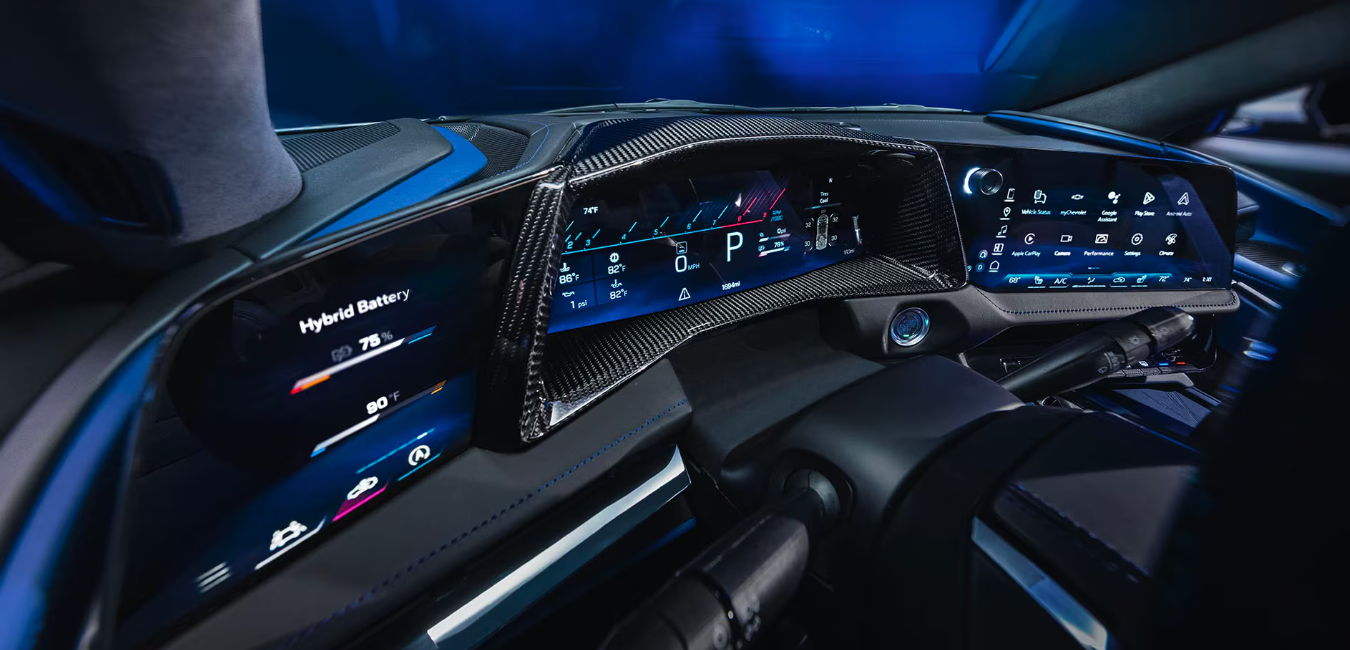
Fig. 14
TIP: The VCD and Aux Display touch screens may be warm to the touch. This is normal operation. The screens should not be replaced for being warm.
The auxiliary display provides a dedicated, driver-configurable space for instrumentation like trip mileage or Performance Traction Management settings.
The PTM, traction control disable, and launch control switches are now located below the auxiliary display on the left side of the instrument panel.
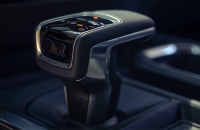
The center console has a redesigned drive mode selector and a new wireless phone charging pad along with the gear selector controls.
The HVAC controls have been repositioned under the center display, creating a more open environment between driver and passenger and enabling space for an integrated passenger grab handle.
Several new interior color schemes are available on all models. One new option is Asymmetrical Adrenaline Red, which includes a racing-inspired Adrenaline Red Competition driver’s seat and a Jet Black GT2 passenger seat. (Fig. 15)
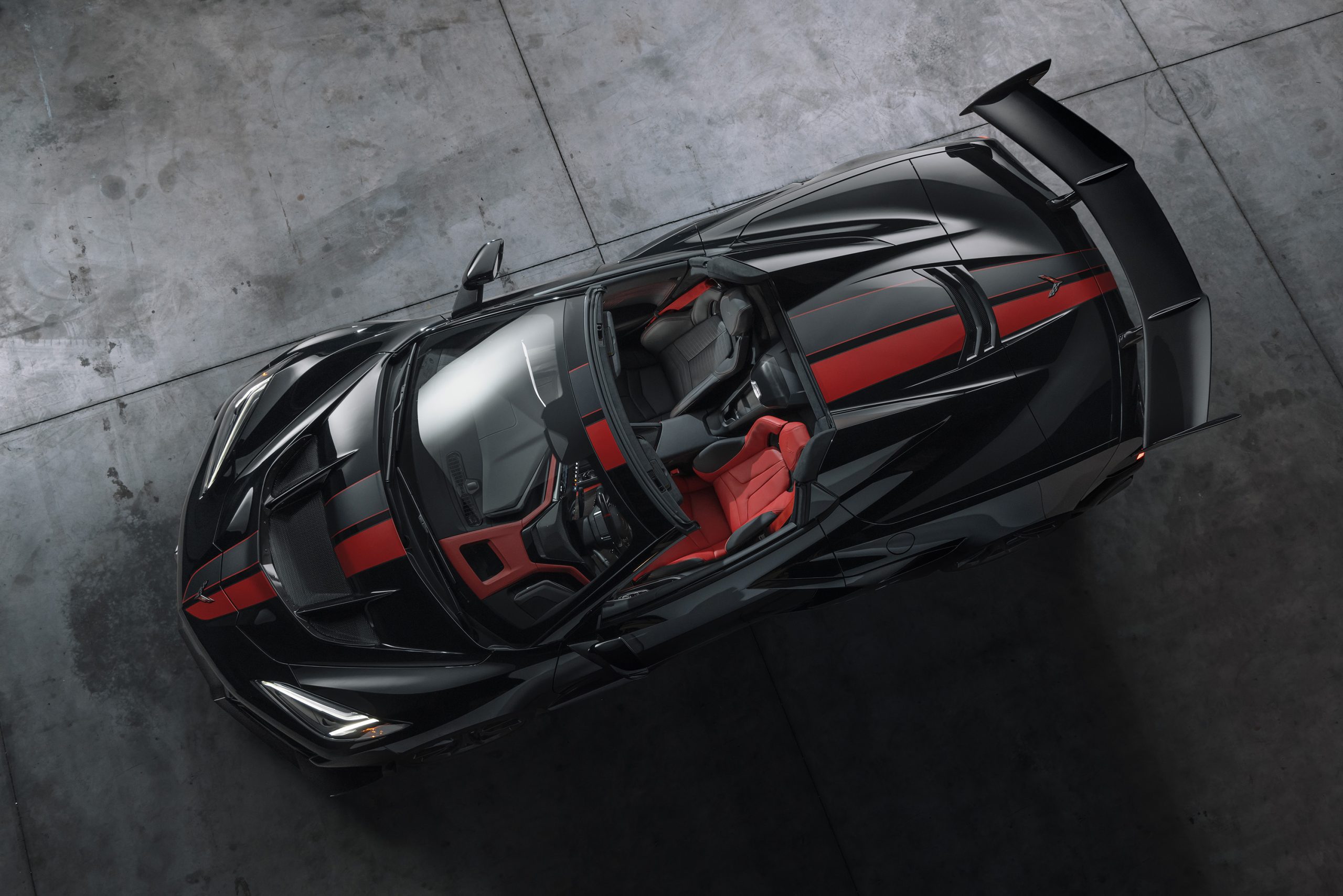
Fig. 15
Performance Package
The available ZTK Performance Package helps take on-track capability to another level. It features enhanced suspension tuning with higher spring rates, Michelin Pilot Cup 2R tires and requires the high-downforce Carbon Aero package.
The Carbon Aero package includes a number of carbon-fiber components, including a high-wing spoiler, underbody strakes, hood lip gurney and carbon-fiber dive planes, that all work together to produce over 1,200 lbs. of downforce — the highest downforce of any production Corvette in history.
Limited Edition
For 2026, the Corvette ZR1X will be available with an exclusive Quail Silver Limited Edition package that features Blade Silver Matte paint (Fig. 16), Corvette’s first matte production paint since the 1960s. The package will be exclusively available on the Corvette ZR1X 3LZ convertible.
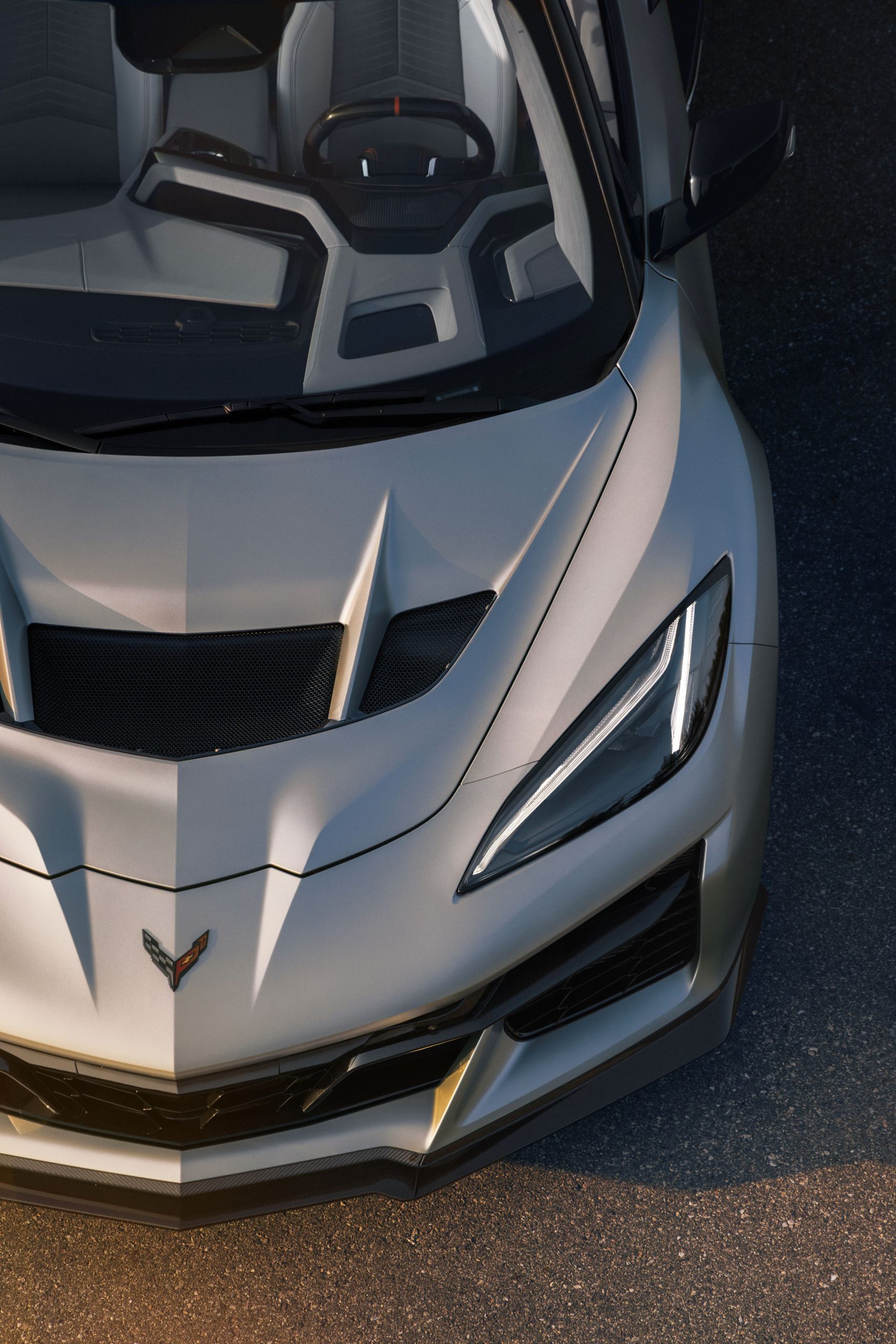
Fig. 16
For additional information about the 2026 Corvette ZR1X, refer to Bulletin #25-NA-253.
– Thanks to Lane Rezek




I’m just a regular joe tech at a dealership. Is it possible to get a poster of figure nine? I like what I call x-ray pictures of vehicles. In the past, if any pictures/posters/sales brochures where requested, you have to be in sales. Any type of sales material/promotional items for corvettes had to be ordered and was the only avenue to get corvette marketing information. If that is still the only way, what could be a way for me to get something like that? (i.e. fig. nine). Gone are the days when sales brochures of all GM vehicles were readily available to the general public.